A Network, Not One Road
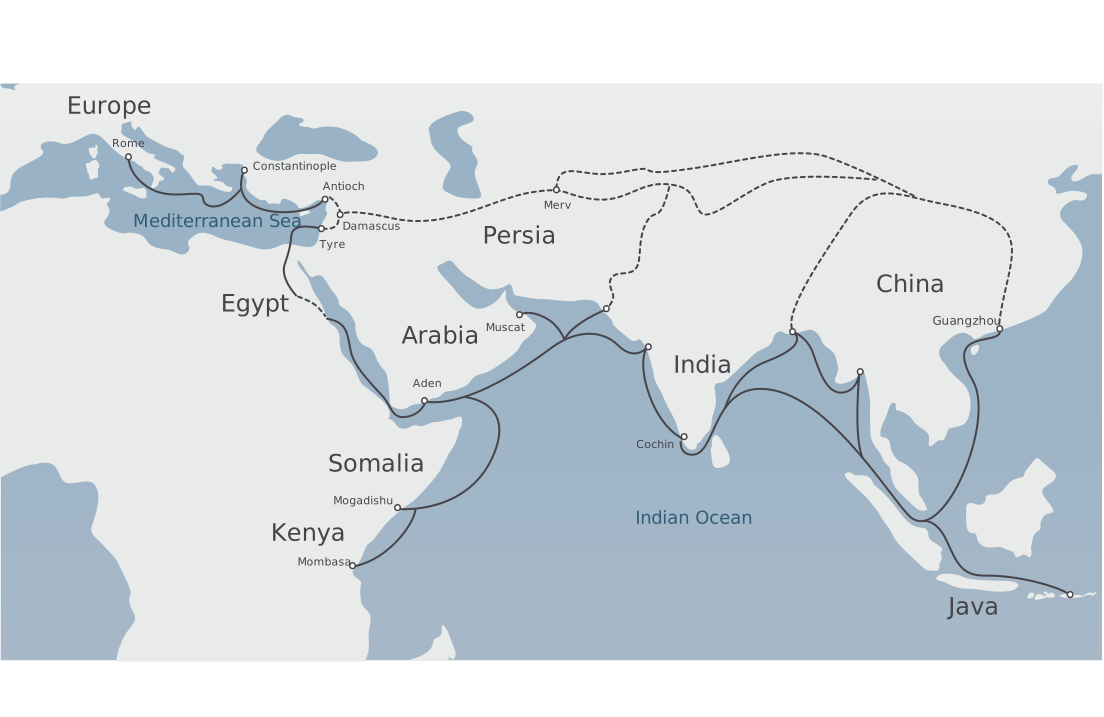
For many centuries before Europeans crossed the Atlantic, merchants moved goods and ideas across Africa, Asia, and Europe. The name Silk Road can be misleading because there was no single road from China to Europe. The Silk Roads were a changing network of land and sea routes that linked many regions.
Most merchants traveled only part of the distance. Goods passed from one trader to another and through cities, ports, and markets. Caravans used camels and other pack animals to cross difficult landscapes. Along the routes, people exchanged languages, technologies, religions, foods, artistic styles, and scientific knowledge as well as products.
Goods Traveled Great Distances
Silk from China was famous, but traders carried many other goods. Spices came mainly from South and Southeast Asia. Cotton textiles, porcelain, precious stones, metalwork, glass, horses, and incense also moved through connected markets.
Distance made some goods rare and expensive in Europe. Each stage of a journey involved transportation costs, taxes, risks, and profits for merchants. By the time pepper, cinnamon, cloves, or nutmeg reached a European port, wealthy buyers might pay a high price for them.
Trade Crossed Cultural Boundaries
Asian, African, and Middle Eastern merchants were central to long-distance trade. Important routes crossed the Indian Ocean, the Red Sea, Central Asia, and the eastern Mediterranean. Muslim merchants and states helped connect South and Southeast Asian goods with Mediterranean markets. Italian cities—especially Venice and Genoa—then carried many products to European buyers.
Trade did not mean that societies were always peaceful or equal. Rulers fought for territory and taxed merchants, pirates attacked ships, and travelers faced robbery or war. Still, commerce often continued across political and religious boundaries because many communities benefited from exchange.
The Crusades Increased Contact
Beginning in 1095, European Christian armies launched a series of wars called the Crusades. Their stated religious goal was to capture or defend holy places, especially Jerusalem. Crusaders attacked and killed Muslims, Jews, Eastern Christians, and others, and the wars caused conquest, displacement, and lasting suffering.
The Crusades were not simply trading expeditions, but they increased the movement of ships, soldiers, pilgrims, supplies, and merchants across the Mediterranean. Some Europeans encountered goods and knowledge that were more familiar in Byzantine and Islamic societies. Italian port cities gained commercial opportunities by transporting people and supplies and by trading with eastern Mediterranean markets.
Why Spices Mattered
Spices such as pepper, cinnamon, cloves, and nutmeg were valued for flavoring food. They were also used in medicines, perfumes, and religious practices. Some grew only in particular climates. Cloves and nutmeg, for example, came from islands in Southeast Asia, far from European markets.
Europeans did not need spices because their food was always spoiled, a common myth. Spices were luxury products that showed wealth and connected buyers to distant markets. High demand created large profits for the merchants and governments that controlled their movement.
Searching for More Direct Routes
European merchants depended on a long chain of traders and ports to obtain Asian goods. Venice developed especially strong trade relationships with Muslim-ruled states in the eastern Mediterranean. Other European rulers and merchants wanted a larger share of these profits and hoped to avoid some fees and competitors.
Political change could disrupt or redirect trade, but it did not suddenly end exchange between Europe and Asia. In the 1400s, Portuguese sailors began searching down the coast of Africa for a sea route to Asian markets. Others later tried sailing west. Older trade networks did not disappear; instead, European voyages attempted to enter, reshape, and control parts of a commercial world that already existed.
Check Your Understanding
Choose the best answer. If you miss one, use the feedback and try again.
Why is the name ‘Silk Roads’ more accurate than ‘Silk Road’?
Which statement best describes the Crusades’ connection to trade?
Why did some European rulers support a search for new sea routes?