Objects and Places
Many societies recorded knowledge in ways other than alphabetic writing. Archaeologists study objects, structures, soil, food remains, and other physical evidence. An artifact is an object made, used, or changed by people.
Context matters. An arrow point found beside animal bones tells researchers more than an arrow point separated from its location. Archaeologists carefully record where objects are found and how they relate to one another.
Knowledge Carried Forward
Oral traditions preserve history, law, beliefs, and community knowledge through spoken accounts passed across generations. Indigenous oral histories are important sources and should be studied with the same careful attention given to written documents.
Researchers combine archaeology, oral traditions, environmental evidence, and newer scientific methods. Their explanations are theories supported by evidence, not guesses. A theory may be revised when new evidence is discovered.
Protecting Context
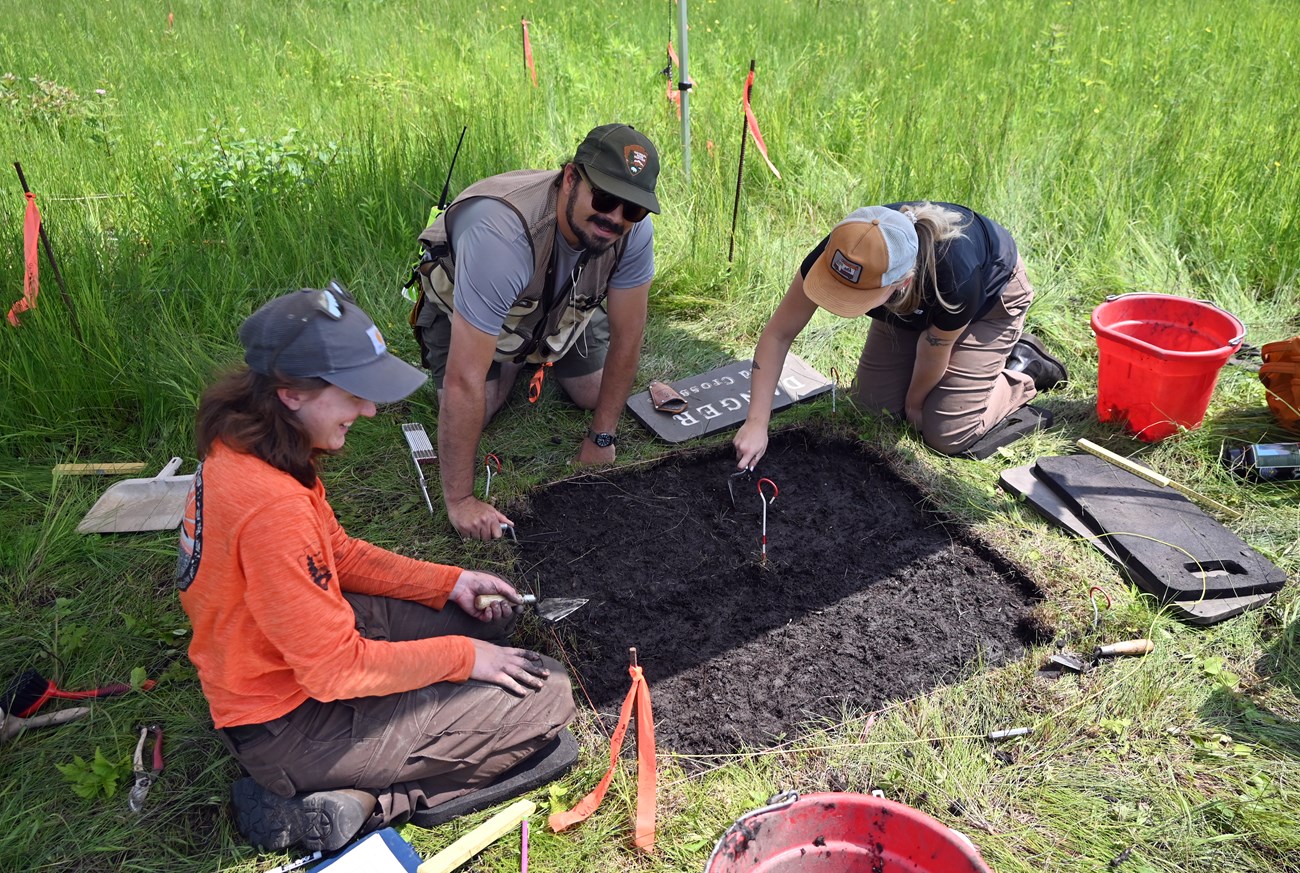
Archaeologists work slowly because excavation changes a site forever. They divide an area into measured units, record soil layers, photograph discoveries, and label objects by location. Even plant remains, animal bones, and tiny pieces of charcoal can reveal diet, climate, or activity.
Removing an artifact without permission destroys information and may violate the law. It can also disrespect a place that is culturally important to a living community. Responsible research includes consultation, careful preservation, and, when appropriate, returning ancestors and cultural items to Indigenous nations.
Check Your Understanding
Choose the best answer. If you miss one, use the feedback and try again.
Why is the location where an artifact is found important?
How can oral traditions and archaeology work together?