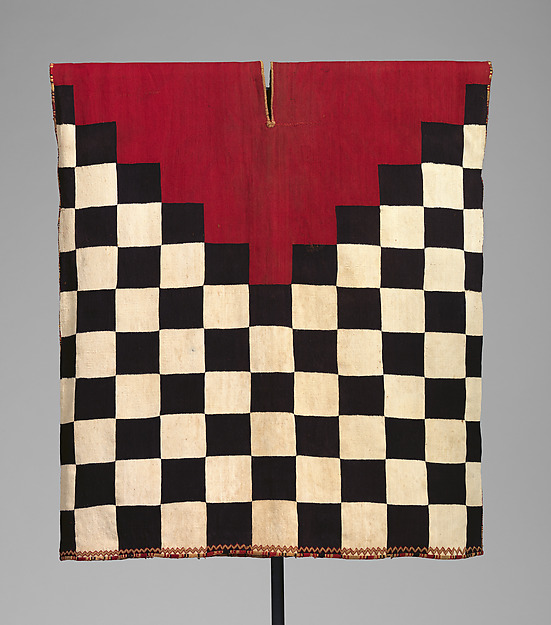
Tawantinsuyu Before the Invasion
In the early 1500s, the Inca governed Tawantinsuyu, the largest empire in the Americas. It stretched along the Andes through parts of present-day Colombia, Ecuador, Peru, Bolivia, Chile, and Argentina. Cusco was its political and sacred center. A vast road system called the Qhapaq Ñan connected communities across mountains, valleys, and deserts.
Inca officials used roads, storehouses, labor obligations, messengers, and local leaders to manage the empire. The state moved some communities and conquered others, so not every subject accepted Inca rule. These tensions mattered when Spanish invaders entered the Andes.
Disease and Civil War Weaken the Empire
Before Francisco Pizarro reached the Inca heartland, diseases introduced through European contact had already spread into the Andes. Smallpox likely killed the ruler Huayna Capac and one of his heirs. A struggle for power followed between two sons, Atahualpa and Huáscar.
Atahualpa’s forces won the civil war in 1532, but the conflict had divided armies, leaders, and communities. Pizarro did not defeat a peaceful, united empire at full strength. His expedition entered a political crisis and sought help from Indigenous peoples who opposed Atahualpa or Inca control.
The Ambush at Cajamarca
In November 1532, Pizarro entered Cajamarca with fewer than two hundred Spaniards. Atahualpa arrived with a much larger group. The Spanish hid soldiers, horses, and weapons around the town square. After a tense meeting, they launched a surprise attack, killed many unarmed attendants, and captured Atahualpa.
Horses, steel weapons, and guns created fear and confusion, but surprise and the seizure of the ruler were more important than numbers alone. Indigenous allies and interpreters also supported the Spanish expedition. The event was an ambush, not a fair battle between two armies.
A Ransom Did Not Bring Freedom
While imprisoned, Atahualpa offered an enormous ransom of gold and silver. Inca communities sent valuable objects from temples and palaces. Spanish soldiers melted much of the metal into bars so it could be divided among them.
Pizarro’s men accepted the treasure but did not release Atahualpa. They held a trial controlled by the invaders and executed him in 1533. His death disrupted Inca leadership, yet it did not place the entire Andes under Spanish control.
Conquest Continued After Cusco
Spanish forces and their Indigenous allies marched toward Cusco and took the city in 1533. They used the Inca road system to move troops and supplies. Pizarro later founded Lima near the Pacific coast as a Spanish colonial capital.
The Spanish first supported Manco Inca as a ruler, but he rebelled against their abuse. In 1536, his forces surrounded Cusco in a major uprising. After the siege failed, an independent Inca state continued from Vilcabamba until Spanish forces captured and executed Túpac Amaru in 1572.
A Conquest Shaped by Indigenous Choices
Older accounts sometimes claim that a tiny Spanish force easily defeated millions of people because Europeans were naturally stronger or more advanced. That explanation is false and incomplete. Civil war, epidemic disease, surprise, Indigenous alliances, political rivalries, and the capture of leaders all shaped events.
Andean peoples made different choices under dangerous conditions. Some allied with the invaders, some fought them, and many protected their families, languages, farms, and beliefs. Quechua and Aymara communities remain present today. Their survival shows that conquest was never the disappearance of Indigenous peoples.
Check Your Understanding
Choose the best answer. If you miss one, use the feedback and try again.
Why was the Inca Empire vulnerable when Pizarro entered the Andes?
How did Pizarro’s forces capture Atahualpa despite their small number?
Which evidence shows that Spanish conquest did not end with Atahualpa’s death?