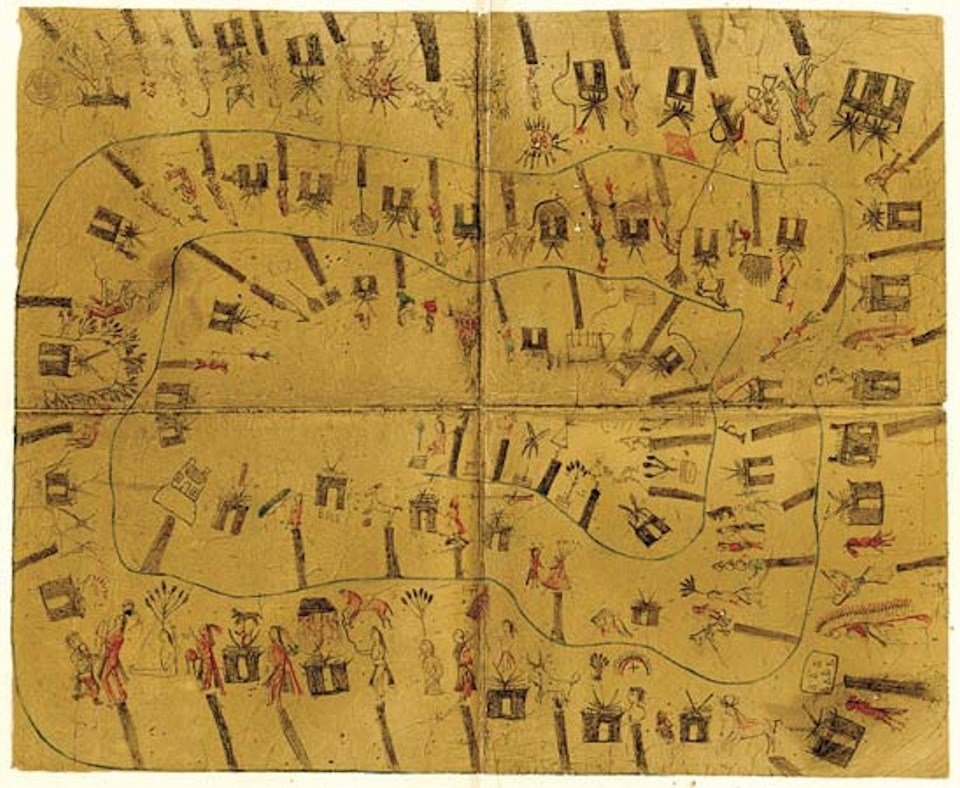
Communities Meet New Diseases
Before 1492, the peoples of the Americas lived in thousands of communities, from small villages to large cities. They traded, traveled, farmed, and sometimes fought across wide regions. Yet most had been separated from the disease environments of Europe, Africa, and Asia for many generations.
Regular Atlantic voyages changed that separation. Europeans and Africans carried pathogens that caused smallpox, measles, influenza, typhus, and other illnesses. Travelers did not understand germs, and people could spread an infection before they knew they were sick. Trade routes, military expeditions, missions, and colonial settlements then carried epidemics far beyond the first ports of contact.
Why Epidemics Were So Destructive
Indigenous populations had no previous exposure to many newly introduced infections. This meant communities had little existing immune protection against them. Smallpox was especially deadly, but different diseases struck at different times and places. One epidemic could be followed by another before a community had recovered.
A disease did not need to kill everyone directly to cause a crisis. When many people became sick at once, there might not be enough healthy caregivers, farmers, hunters, or water carriers. Food production could fall. Children might lose parents, and communities might lose leaders, healers, and knowledge keepers. Grief and displacement added to the damage.
Disease Did Not Act Alone
Older accounts sometimes describe Indigenous population loss as if disease alone caused it. That explanation is incomplete. Conquest, warfare, enslavement, forced labor, hunger, and removal from homelands weakened communities and increased exposure. Colonizers sometimes crowded people into missions or labor sites, where infections spread more easily.
These pressures were connected. A community recovering from war or famine was more vulnerable to an epidemic. A community weakened by disease found it harder to defend its land or resist forced labor. European empires then used the resulting population loss to expand colonial control. Biology mattered, but colonial choices shaped who was exposed and whether people had food, safety, and time to recover.
The Evidence Has Limits
Historians agree that epidemics caused catastrophic Indigenous population loss, but exact totals are difficult to calculate. Many communities did not keep population counts in European-style written records, and colonizers often recorded only the people they could tax, convert, or control. Some documents were created years after the events they describe.
Researchers compare colonial records with archaeology, oral histories, environmental evidence, and Indigenous knowledge. Estimates differ because population sizes before contact and death rates varied greatly by region. Responsible historians explain that uncertainty instead of presenting one number as settled fact. The pattern, however, is unmistakable: repeated epidemics and colonization transformed populations across the Americas.
Change Reached Entire Societies
Demography is the study of populations—their size, location, age groups, and changes over time. After epidemics, survivors sometimes joined neighboring communities, moved to safer places, or formed new political alliances. Nations changed where they lived and how they organized themselves. Loss of elders and specialists could interrupt the passing of language, ceremonies, farming knowledge, and historical memory.
Colonial officials often mistook this change for disappearance. In reality, Indigenous peoples adapted to a disaster they had not caused. They cared for survivors, protected children, preserved knowledge, rebuilt towns, negotiated, fought, and created new communities. Population decline did not erase Indigenous identity or sovereignty.
Survival Is Part of the History
The history of disease after 1492 is not only a story of death. Indigenous nations survived repeated epidemics and colonial attempts to take their land and power. Their descendants remain present throughout the Americas, sustaining languages, governments, traditions, and relationships with their homelands.
Studying demographic change carefully avoids two errors. It does not minimize the enormous human cost of epidemics and colonization. It also does not describe Indigenous peoples as helpless or vanished. A complete account recognizes catastrophe, the colonial conditions that worsened it, and the strength of communities that endured.
Check Your Understanding
Choose the best answer. If you miss one, use the feedback and try again.
Why were introduced diseases especially destructive to many Indigenous communities?
Why is disease alone an incomplete explanation for Indigenous population loss?
Which statement best describes Indigenous history after the epidemics?