A Westward Plan
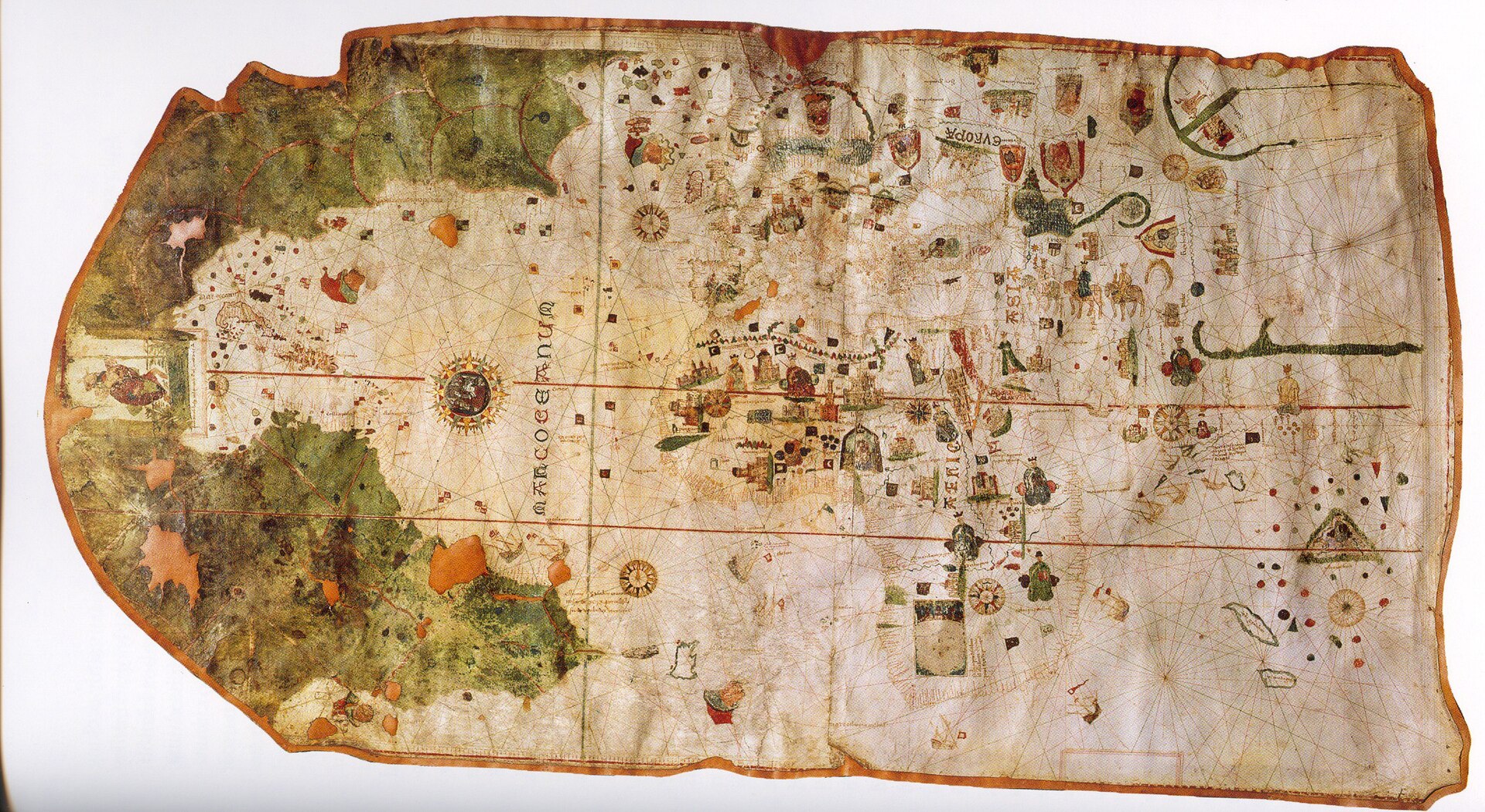
Christopher Columbus was a sailor from Genoa who believed he could reach Asian markets by sailing west across the Atlantic. He correctly understood that Earth was round, but he greatly underestimated its size and overestimated how far Asia extended eastward. He did not know that two continents and a vast ocean lay between Europe and Asia.
Columbus presented his plan to several rulers. Queen Isabella and King Ferdinand of Spain finally agreed to support it in 1492. They hoped to gain access to trade, spread Christianity, and strengthen Spain against rival kingdoms. The agreement also promised Columbus titles and a share of the wealth if the voyage succeeded.
Three Ships Cross the Atlantic
Columbus left Palos, Spain, on August 3, 1492, with about ninety crew members. His fleet included the Niña and Pinta, which were caravels, and the larger Santa María. After stopping in the Canary Islands for repairs and supplies, the ships sailed west into the Atlantic in early September.
The crew used compasses, estimates of speed and direction, observations of the sky and sea, and Columbus’s calculations. Weeks passed without sight of land. Some sailors grew afraid, but evidence such as birds and floating plants suggested that land was near. Early on October 12, a sailor aboard the Pinta saw land.
Landfall at Guanahani
The island’s people called it Guanahani. Its exact modern location is still debated, but it was in the Bahamas. Columbus renamed the island San Salvador and claimed it for Spain. A European ceremony, however, could not erase the presence or sovereignty of the people who already lived there.
Columbus believed he had reached islands near Asia. He used the word indios for the people he met because he thought he had reached the Indies. This mistaken label later became a broad European name for many different Indigenous nations.
The Taíno World
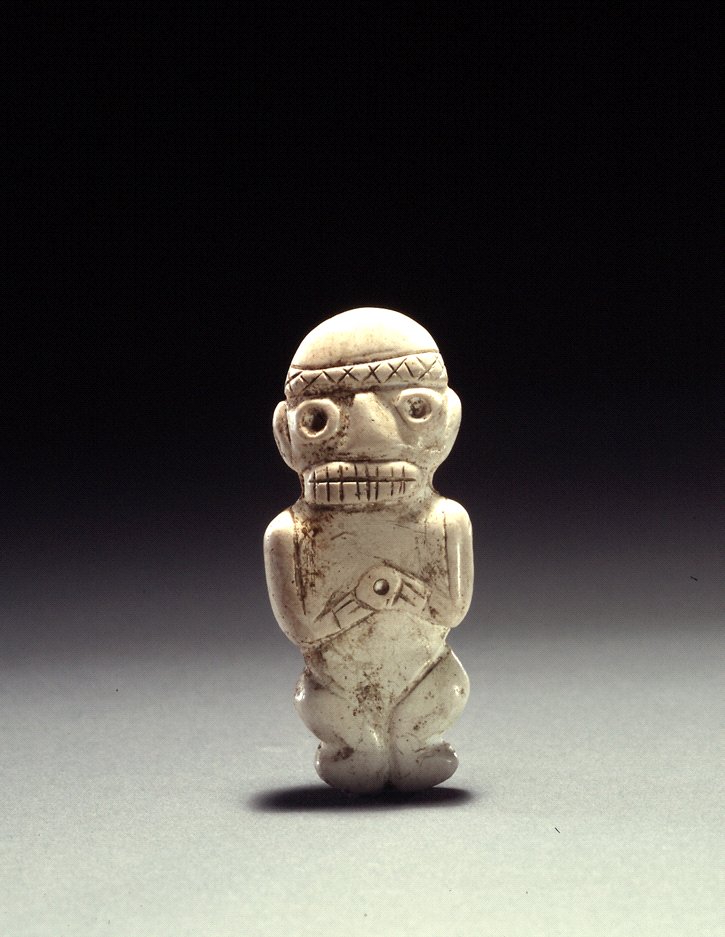
The people Columbus encountered belonged to Taíno communities with their own leaders, trade networks, spiritual traditions, and systems of farming. They grew cassava, maize, and other crops, traveled between islands in canoes, and made objects from wood, stone, shell, cotton, and clay. Taíno societies were not identical, but they were connected across much of the Caribbean.
At first, Taíno people and the newcomers exchanged food, cotton, parrots, glass beads, bells, and other objects. Much of what historians know about these meetings comes from European records, especially a later copy of Columbus’s journal. Those sources preserve important evidence, but they mostly describe events through European eyes.
Trade, Captivity, and a Spanish Claim
Columbus praised the Taíno people’s generosity, yet his writings also reveal that he quickly judged how they might be controlled. He seized several Taíno people to serve as guides and interpreters and searched for gold. These actions show that the first voyage included coercion from the beginning, not only peaceful exchange.
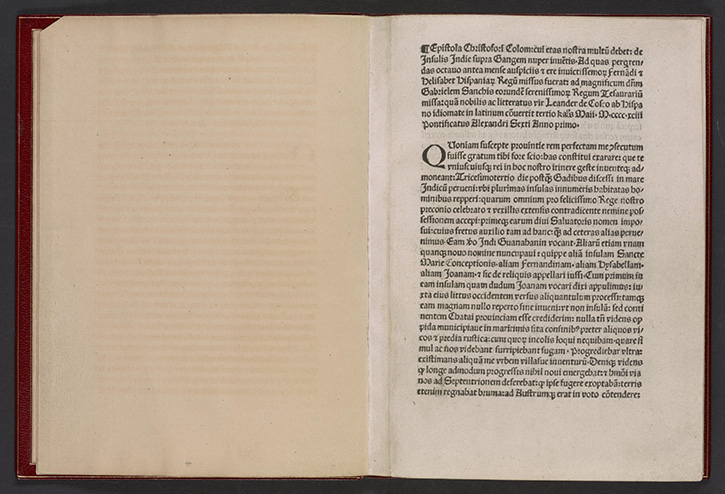
The ships continued to Cuba and Hispaniola. On December 24, the Santa María ran aground near Hispaniola. With help from Taíno leader Guacanagarí and his community, the crew saved supplies and built a small settlement called La Navidad. Columbus left thirty-nine men there and sailed back to Spain in January 1493. He returned with news of islands, people, and possible wealth—and with plans for a much larger expedition.
Encounter, Not Discovery
Columbus’s voyage created a lasting sea connection between Europe and the Americas, but it did not prove that he had reached Asia. Nor was he the first person to reach the Americas. Indigenous peoples had lived throughout the Western Hemisphere for thousands of years, and Norse sailors had reached part of North America centuries earlier.
For that reason, historians often describe 1492 as an encounter or the beginning of sustained contact rather than the ‘discovery’ of America. Even ‘encounter’ must be used carefully because the relationship soon became unequal and violent. Columbus’s later voyages helped begin Spanish colonization, which brought conquest, forced labor, enslavement, disease, and enormous change. Taíno peoples and cultures also survived, adapted, and remain part of Caribbean life today.
Check Your Understanding
Choose the best answer. If you miss one, use the feedback and try again.
Why did Columbus sail west across the Atlantic?
Why is it inaccurate to say Columbus ‘discovered’ America?
Which evidence shows that the first encounters included coercion as well as exchange?