People of the Longhouse
The Haudenosaunee are Indigenous peoples whose homelands include much of present-day New York. Their name is often translated as People of the Longhouse. The original five nations were the Mohawk, Oneida, Onondaga, Cayuga, and Seneca. The Tuscarora later became the sixth nation.
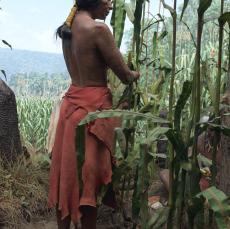
Many families lived together in longhouses within villages. Communities grew corn, beans, and squash, often called the Three Sisters because the crops support one another as they grow. People also hunted, fished, gathered plants, and traded.
Clans and Responsibilities
Haudenosaunee society is matrilineal. Clan identity is passed through the mother’s family. Members of a clan have responsibilities to support one another, even across different nations.
Clan mothers hold important leadership responsibilities. They select the chiefs who represent their clans and can remove a chief who fails to act for the people. Men and women held different responsibilities, but women had significant authority in family life, land use, and government.
A Home and a Model for Society
A longhouse was built from a frame of upright posts and flexible poles covered with sheets of bark. A central aisle linked family spaces and shared fires. Related families from the same clan lived together, with relationships traced through the mothers' side.
The longhouse also became a political symbol. The Mohawk were called Keepers of the Eastern Door, the Seneca Keepers of the Western Door, and the Onondaga Keepers of the Central Fire. In this way, the confederacy could be imagined as one great longhouse stretching across Haudenosaunee homelands.
Check Your Understanding
Choose the best answer. If you miss one, use the feedback and try again.
How did the Three Sisters support Haudenosaunee communities?
What does matrilineal mean in Haudenosaunee society?